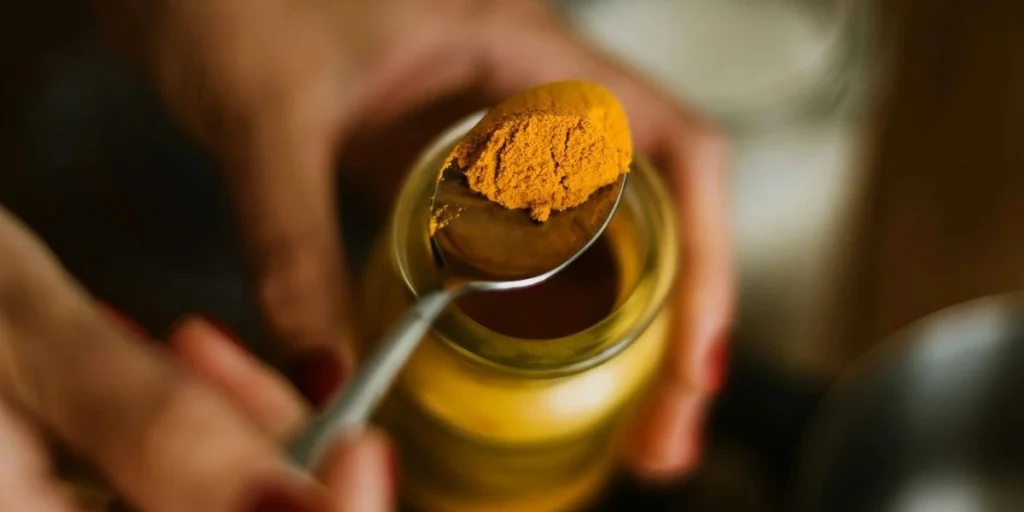
Turmeric ( Curcuma longa ) is more than just a popular spice in Indian cuisine – it is a natural antioxidant, immunostimulant and anti-inflammatory agent that is increasingly making its way into the daily diet of health-conscious individuals. Its main active ingredient, curcumin , is the subject of numerous scientific studies confirming its wide range of health benefits.
Why has turmeric become an indispensable natural supplement?
Turmeric has been used in traditional medicine for over 4,000 years. Today, its potential is being re-recognized by modern science. Due to its rich profile of active ingredients, it acts as:
- natural anti-inflammatory agent ,
- antioxidant ,
- immune system support ,
- a regulator of digestion and even a preserver of healthy brain function .
1. Anti-inflammatory action and joint protection
Curcumin has been shown to inhibit inflammatory processes in the body. It works at the molecular level, where it inhibits the release of inflammatory enzymes and cytokines. It is precisely because of these properties that turmeric is an excellent support for joint problems , rheumatoid arthritis and other chronic inflammations. (1*)
2. Natural immune system booster
Turmeric stimulates the production of antibodies and activates white blood cells, which improves the immune system’s response. During times of colds, flu, or greater psychophysical stress , turmeric is an effective natural defense against infections . (1*)
3. Supports healthy digestion
Even small amounts of turmeric can stimulate bile secretion, which improves fat metabolism and prevents digestive problems such as bloating, constipation, or a feeling of heaviness in the stomach. Turmeric also has a mild detoxifying effect , which is important for the liver and intestines. (3*)
4. Turmeric for healthy skin and a more beautiful appearance
The antioxidants in turmeric help neutralize free radicals that cause premature skin aging. In addition, turmeric has antibacterial properties , which is why it is often used in natural skin care (e.g. for acne or eczema). (3*)
5. Brain and memory support
Scientists have found that curcumin stimulates the production of BDNF, a growth factor that affects the renewal of brain cells. This means that turmeric can help improve memory, concentration , and even reduce the risk of Alzheimer’s disease in the long term. (2*)
How to consume turmeric properly?
Due to limited natural absorption, more and more people are opting for liposomal curcumin supplements . This is a technologically advanced form where curcumin is encapsulated in liposomes – microscopic fatty shells that allow it to:
- high bioavailability ,
- faster passage through the gastrointestinal tract ,
- targeted delivery to tissues ,
- greater effectiveness even at lower doses .
The liposomal form is an ideal solution for those seeking the therapeutic effects of turmeric , especially for joint problems, the immune system, or chronic inflammation.
One such supplement is Elixiré Immuno Booster Curcumin, which contains curcumin in the form of liposomes, allowing for better absorption than regular turmeric.
Attention: who is turmeric not recommended for?
Although turmeric is natural and safe, be careful:
- people taking blood thinning medications,
- those with gallstones or liver dysfunction.
In case of any doubts, it is recommended to consult a personal doctor.
Conclusion
Turmeric is not just a culinary spice, but a natural weapon against inflammation, a weakened immune system, and digestive problems . Using it in your daily diet or as a supplement is a simple yet effective step towards better well-being and long-term health.
If you are looking for a natural solution to support your body, turmeric is a great choice .
Literature (*):
1. Source: Curcumin: a modulator of inflammatory signaling pathways in the immune system (KR Kahkhaie, A. Mirhosseini, A. Aliabadi, A. Mohammadi, MJ Mousavi, SM Haftcheshmeh, T. Sathyapalan, A. Sahebkar), https://pubmed.ncbi.nlm.nih.gov/31140036/
2. Source: Inflammaging and Brain: Curcumin and Its Beneficial Potential as Regulator of Microglia Activation, (A. Cianciulli, R. Calvello, M. Ruggiero, MA Panaro), https://pubmed.ncbi.nlm.nih.gov/35056657/
3. Source: Turmeric and Curcumin: From Traditional to Modern Medicine, (M. Akaberi, A. Sahebkar, SA Emami), https://pubmed.ncbi.nlm.nih.gov/34331682/
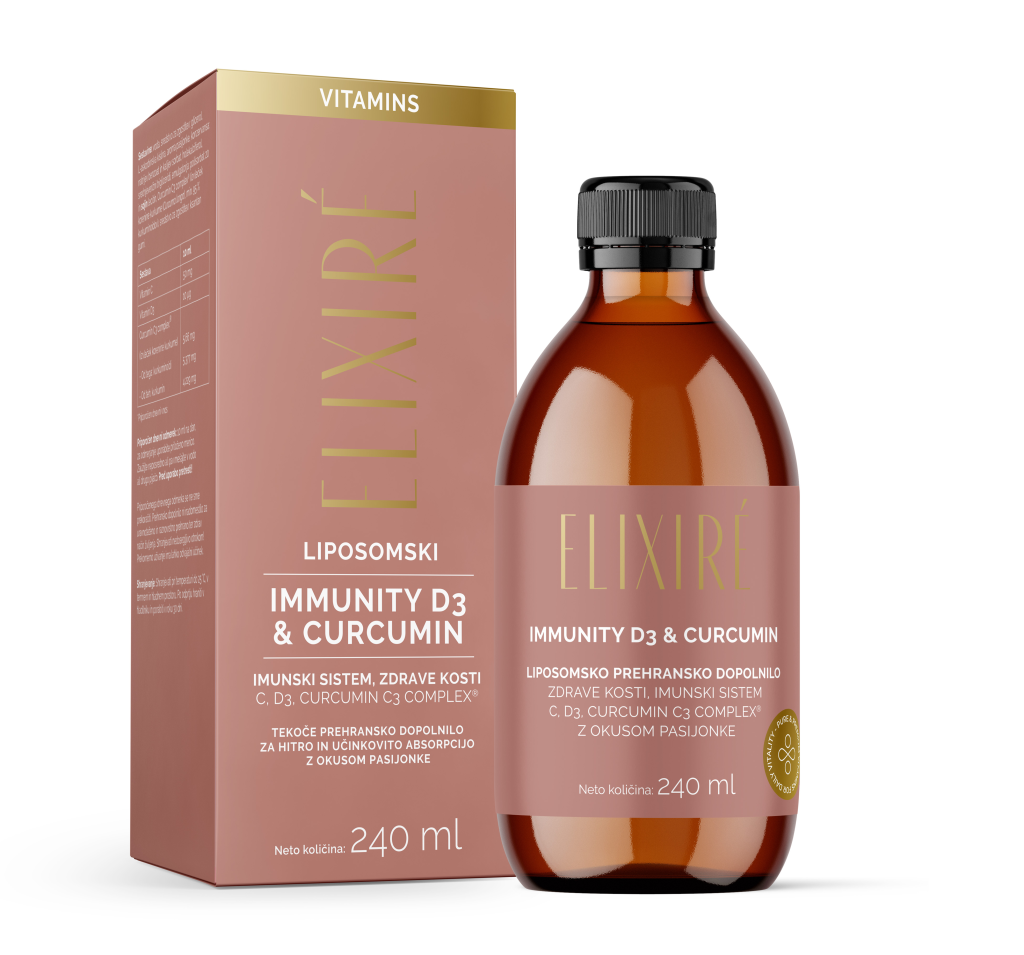
ELIXIRÉ IMMUNITY D3 & CURCUMIN, passion fruit flavour, food supplement
Read our latest posts
- Nettle – a natural gift of forest wisdom
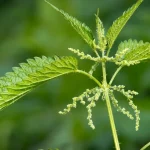 Stinging nettle (Urtica dioica) is an ancient medicinal plant rich in nutrients and antioxidants. It is clinically supported for its allergy relief, anti-inflammatory and nutritional value. Nettle tea or dishes provide gentle yet effective support for the body.
 - Burns: how to recognize them, take action and restore the skin with Ribogal fish ointment
 Burns weaken the skin barrier, causing moisture loss and inflammation. Quick first aid includes cooling and the use of gentle ointments. Ribogal fish ointment, rich in petrolatum, lanolin and omega-3 fatty acids, supports skin regeneration, guides its protection and hydration, and accelerates the healing process.
 - Yogurt bowl with flaxseed for energy, digestion and heart
 Yogurt bowl with flaxseed, berries and nuts – a nutritious and refreshing meal, rich in fiber and omega-3 to support the heart and digestion.