When we enter the world of medicinal plants, lemon balm – a gentle, pleasantly scented plant – greets us like an old acquaintance. Scientifically known as Melissa officinalis L. , it has been valued in Slovenia for centuries for its mild yet effective effects.
With its subtle aroma and calming nature, lemon balm encourages us to slow down, take a deep breath, and take a moment for ourselves.
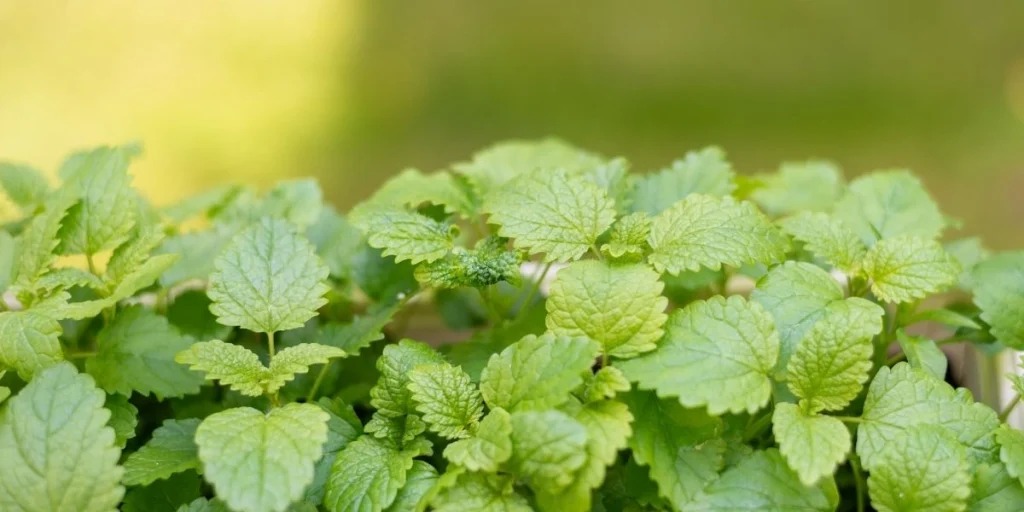
Lemon balm belongs to the Lamiaceae family, which also includes well-known relatives such as mint and sage. Lemon balm’s characteristic heart-shaped leaves emit a pleasant lemony scent, making it easily recognizable.
The name melissa means bee in Greek – these tiny pollinators simply adore it. Even folk names like “bee balm” and “honey balm” indicate this special connection with nature.
Lemon balm is a perennial plant that grows up to 80 centimeters tall. Although it originates from the Mediterranean, it also thrives in our regions, where it is often found in home herb gardens. In herbalism, we mainly use the leaves – they contain essential oil with characteristic active ingredients such as citronellal and citral, which help calm the nervous system. (1*)
Lemon balm is not just an herb for better sleep
Its uses are much broader – folk medicine has long associated it with alleviating digestive problems such as bloating, flatulence, and nervous stomach upset. (2*) In older records, we find mentions that lemon balm was also used to treat wounds and regulate heart function.
Today, scientific research focuses on its potential to support stress and improve cognitive function. (3*) (4*)
In this light, lemon balm tea is a wonderful everyday companion.
A cup of freshly brewed lemon balm tea brings more than just comfort – it’s a little ritual that reminds us of the power of nature.
Pour hot water over fresh or dried leaves and let steep for a few minutes. The result is a gentle drink that clears the mind and calms digestion. (2*) It is especially recommended in the evenings when you want to calm your inner rhythm.
At Galex, we use only proven raw materials and follow high quality standards. Our lemon balm teas are packaged with the aim of preserving the natural properties of the plant. All products comply with Slovenian legislation and are classified as safe – lemon balm is a plant that can also be used as food.
Scientifically confirmed – also by the EMA
The European Medicines Agency (EMA) officially recognises the traditional use of lemon balm for the relief of mild forms of insomnia , digestive problems associated with nervous tension , and feelings of restlessness . (5*) This means that lemon balm has a long history of safe use as a herbal medicine and that its effects are supported by practice and science.
It is important to emphasize that lemon balm, despite its beneficial effects, is still a medicinal plant. It should be used with caution during pregnancy and breastfeeding – preferably after consulting a healthcare professional. It should also be consumed in moderation when taking thyroid medication, as large amounts can affect its function.
Whether you’ve known lemon balm since childhood or are discovering it for the first time, its power remains the same: gentle, soothing and natural. In a time when the world is spinning faster and faster, a cup of lemon balm tea is a small reminder to take a moment for ourselves.
Literature: (*)
- Source: Pilot trial of Melissa officinalis L. leaf extract in the treatment of volunteers suffering from mild-to-moderate anxiety disorders and sleep disturbances , (J. Cases, A. Ibarra, N. Feuillère, M. Roller, SG Sukkar), https://pubmed.ncbi.nlm.nih.gov/22207903/
2. Source: The effects of lemon balm (Melissa officinalis L.) on depression and anxiety in clinical trials: A systematic review and meta-analysis , (J. Ghazizadeh, S. Sadigh-Eteghad, W. Marx, A. Fakhari, S. Hamedeyazdan, M. Torbati, S. Taheri-Tarighi, M. Araj-Khodaei, M. Mirghafourvand), https://pubmed.ncbi.nlm.nih.gov/34449930/
3. Source: Modulation of mood and cognitive performance following acute administration of Melissa officinalis (lemon balm) , (DO Kennedy, AB Scholey, NTJ Tildesley, EK Perry, KA Wesnes), https://pubmed.ncbi.nlm.nih.gov/12062586/
4. Source: Effects of Melissa officinalis Phytosome on Sleep Quality: Results of a Prospective, Double-Blind, Placebo-Controlled, and Cross-Over Study , (F. Di Pierro, D. Sisti, M. Rocchi, A. Belli, A. Bertuccioli, M. Cazzaniga, CM Palazzi, ML Tanda, N. Zerbinati), https://www.mdpi.com/2072-6643/16/23/4199
5. Source: Community herbal monograph on Melissa officinalis L., folium , (EMA), https://www.ema.europa.eu/en/documents/herbal-monograph/final-community-herbal-monograph-melissa-officinalis-l-folium_en.pdf
Common Melissa
Read our latest posts
- Nettle – a natural gift of forest wisdom
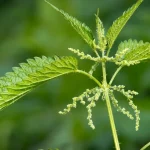 Stinging nettle (Urtica dioica) is an ancient medicinal plant rich in nutrients and antioxidants. It is clinically supported for its allergy relief, anti-inflammatory and nutritional value. Nettle tea or dishes provide gentle yet effective support for the body.
 - Burns: how to recognize them, take action and restore the skin with Ribogal fish ointment
 Burns weaken the skin barrier, causing moisture loss and inflammation. Quick first aid includes cooling and the use of gentle ointments. Ribogal fish ointment, rich in petrolatum, lanolin and omega-3 fatty acids, supports skin regeneration, guides its protection and hydration, and accelerates the healing process.
 - Yogurt bowl with flaxseed for energy, digestion and heart
 Yogurt bowl with flaxseed, berries and nuts – a nutritious and refreshing meal, rich in fiber and omega-3 to support the heart and digestion.